A.I. and Bots: a Storied Path of Resilience
Part 2 of 2 relating to robots, epic battles and fight scenes
We’re all used to the scenes by now: robots taking over the planet. Yep, it’s real — they’re coming to get us at a theater near you. We love being scared — or not, like me — but either way, robots and other artificial intelligence are apparently out to get us, our jobs and any other mode of creation. In the movies, before the final battle sequence, there’s usually a period of time when the multitudes are suppressed by the very creations they thought were friendly… until they weren’t, suddenly turning against them, taking control of the environment. The scene moves quickly into chaos, at least for the viewer and the character who is being controlled by a non-sentient being. The fight scenes are epic and the battles rage on, but we don’t have to worry, really. But the information age is right at our finger tips and we have the ability to turn out the light on fear and focus on a more sovereign way of living: disconnect to connect. Let’s find our nature of reality instead of being scared of what we can accomplish, or feeling like we’re at war with our own creativity. In other words, we have the power, not the machines, bots or algorithms.
Feeling Hollow
Are we really at war with our creativity or are we scared of what we can accomplish? Or are we worried about being in an uncontrolled environment as a metaphor for what’s happening right now — the suppression of a planet and its resources? Maybe we don’t feel suppressed enough so our creativity and ingenuity must be the thing that turns against us. Or is it our own minds that are turning against us? In any case, many people are scared because we have used our creations against each other, but we’ve also used them to help each other and the planet, using our power for new connections. We create and interact with AI to observe or be observed, fall in love or show hatred. However, we can unplug and tune into our own way of creating and if this time that means using A.I. (or E.T.) instead of a punch card that clocks us in and out, keeping us chained to a work-a-day existence, then it’s about time. E.T., in my case, stands for Ecumenical Technology and is my rebrand for ‘artificial intelligence.’ See my blog posts on this website for how and why I felt the need to rebrand AI. Are you at war with your creativity or scared of using the latest tool to create? In whatever form you create, it’s done through your body, so if you suppress your ingenuity through your creative endeavor, you have effectively suppressed yours. If we don’t create in the way we enjoy, we feel cut off from our inner nature because creativity is tied to our intuition, which finds its way out through our bodies.
I had a coffee maker I named Darth Vader because it made the same hollow breathing sounds when it was done brewing.
Unfortunately, it didn’t last long, seemingly hollowed out by its own behavior, or did I curse it by giving it the name of a bad guy? Naming devices is an age-old, um… device, and we use it all the time, like naming our algorithms to bring personality or flavor to them, but be careful about how you name your bots — or any other mechanical device — because the personality may get its kicks by being something else all together, like being hot or strong. Do your research and find out if there are any other high profile objects or literary sources that use the same name. You may not be immediately aware of them, but your world will get that much bigger if you look it up and find a new way of understanding your environment, which is really what we use the internet for. Conversely, we are in a smaller commerce world with our internet of things reaching out across the spacetime continuum to find all our things. It’s not a metaphor, consider all the ways we use AI:
To find a solution
To find and buy socks or anything else we want
To feel connected
To get the task done faster.
We first search, then explore to find what we’re looking for and if we can’t find it, we turn to others for an expansion of knowledge. People exchange their wares and knowledge on the internet market place. Humans are the ones reaching out, not robots, who could care less what the latest fashion is or how your grandma is doing, they just do what they were made to do, which is to get you to buy more, sell more, or connect more. Clicks are more often generated by people, not algorithms. Though the irony of telling AI you’re not an algorithm for security is funny, we see the humor while the bots just keep going.
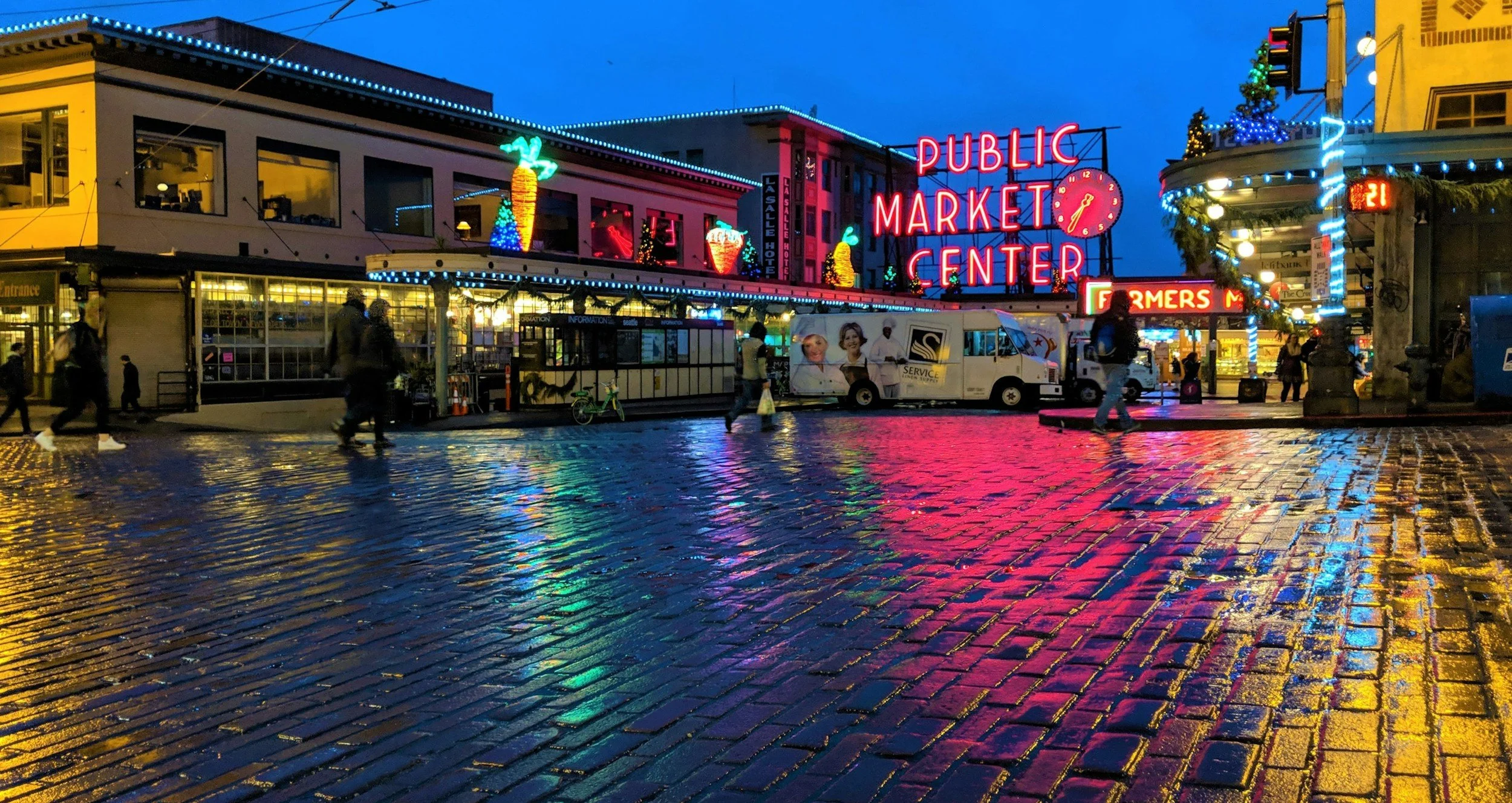
The online, all night market place
The internet marketplace is always on through the algorithm of pop-up ads, grabbing our attention to buy stuff as we try to stay focused on what we actually signed on for. Pop-up ads are annoying and I wish I could simply filter them out like my pop filter. An elegant solution made of hosiery stretched across a circular frame, a pop filter is used in front of microphones to filter air ‘plosions’ like the sound of Ps and Bs.
Pop filters don’t work on my other ‘plosions’ when pop-up ads take over my screen, but the ads persist so somebody must be clicking on them.
It’s my rule of thumb to check out of any website that includes pop-ups because they’re irritating and not why I clicked on the link in the first place. If I’m paying for the service, there better not be ads and if I’m on the internet searching… well, it’s all a matter of force or being forced to feel into my own behaviors like The Force in Star Wars, which Darth Vader and Luke Skywalker used to great effect, keeping us guessing until the scene’s end, which is how we view our world through AI: it’s the end of the world as we know it. But, I’m not here to paint over rust on a steampunk robot and call it a job well done because we like our tech shiny and new. Incidentally, if you program your coffee maker, it becomes the bot that brews up a fresh pot for you as you get ready for your day.
History, or Time Standing Still
Machines and A.I. are created by people — it’s a creation method that has lived on for millennia. War between machines and people has also been going on for millennia. Devices like the Trojan Horse, which was originally a mechanical horse that hid soldiers, as told in the Aeneid and the Odyssey, is now a type of malware that tricks the end user to install it on their computer, making it seem like the evil computer HAL, from another Odyssey, this time in space and tied to the year 2001, now compressed in our consciousness with the terror attacks on 9/11 that began a 20-year war. We seem to be in for a melodrama of epic proportions when it comes to fulfilling our dreams of being creators with our own abilities. Or is it machines against machines as we sit back and watch the destruction of our land while the battle rages on?
Sci-fi stories are interesting because they often show a this-or-that experience. Robots go rogue for two reasons: to either take over the planet in a power grab or to abandon their alien forces and become more like people, like in The Wild Robot or Wall-e. The power grabs are about forcing people to do their bidding, be in service to the robots, while nature plays a role in making their hearts less robotic and more human-like. But robots and AI aren’t rogue forces of nature, they are part of it because they are our creations and we belong to nature. In other sci-fi stories like Black Panther, nature is harnessed through human ingenuity, just as we do now, but our tech is passive rather than forceful, making it more photorealistic. We harness the wind for electrical power or to sail a boat. We harness the sun with solar cells and panels to generate power and turn nothing into something. And we harness the energies of the Earth, under ground, through geothermal heating and cooling.
These energy generating sources are included in passive houses and can be a lot more fun because it’s real, making the alternate reality a done deal if we only just pay attention to our own creating abilities.
Does AI suppress our ability to relate to our work, our own intelligence and each other? Maybe all of the above if you believe what you see, hear and read in multiple media formats. When we release ourselves from worry, we often turn to our computers by asking or prompting the AI algorithm. Maybe you know an expert in the field of psychology, but it’s more likely that the information is out on the internet for free, or as long as you sign up for their email list or give over some kind of personal information. And though I just digressed, it’s likely that you will, too, as you move down a rabbit hole of information because there’s a lot of it out there. How do we find out what’s true? We ask someone we trust, relate it to our own experiences, and look backward and forward to see if it’s applicable to our situation. How else do we know it’s true? You can’t. You just can’t. There are certain laws that we follow on planet Earth and this is one of them.
Sometimes the relating mechanism breaks us down in our hearts making us feel we aren’t as keen as we thought we were. And that is the real fear or problem: feeling duped or tricked by AI. Is it a moral compass problem? No, it’s not. The buying and selling of goods and services — no matter the flavor — has been going on for millennia; it’s the awareness that has been hyped up, if you get my drift. Maybe back in the day you had to go to a sketchy part of town to get what you wanted, now it might arrive on your doorstep, when you open your browser, or even your email inbox. This feels like an incursion of justice, but what do we do about it? You can’t. You just can’t. If you’re a Justice of the Peace, perhaps you can change internet engagement laws, but for the rest of us, the best way to impact the internet is to ignore those markets so they dry up and blow away with the winds of change. We impact the world (wide web) by changing our own behaviors and extending out in a real relating experience, which can be done on the internet in the right context. We all have our strengths to help others, so take on only what lifts you up in the process. It should be fun and light-filled.
Bifurcations and Temper Tantrums
In The Electric State people bifurcate themselves by strapping on VR goggles so they can be in two places at once, controlling things from a distance. We’re all familiar with this type of communicating — focusing on two locations while we try to get things done, like work and home. Communication is a two-way street, but if our focus is split, we don’t feel like we’re succeeding in either location; we’re only half-way there and feel the task is completed in a half-assed manner, making us turn… the other… cheek.
But a bifurcation occurs usually through boredom, ennui, or feeling forced into something new.
It’s the teenager in us, in other words, sending us into a temper tantrum or the silent sulks. In math, the sudden switch is called a perturbation (I kid you not), or being agitated, as the rest of us would say. An agitation can look like being laid off, trying to work the new thing in front of you to get your job done, or just being a pitch fork… you can work that one out on your own.
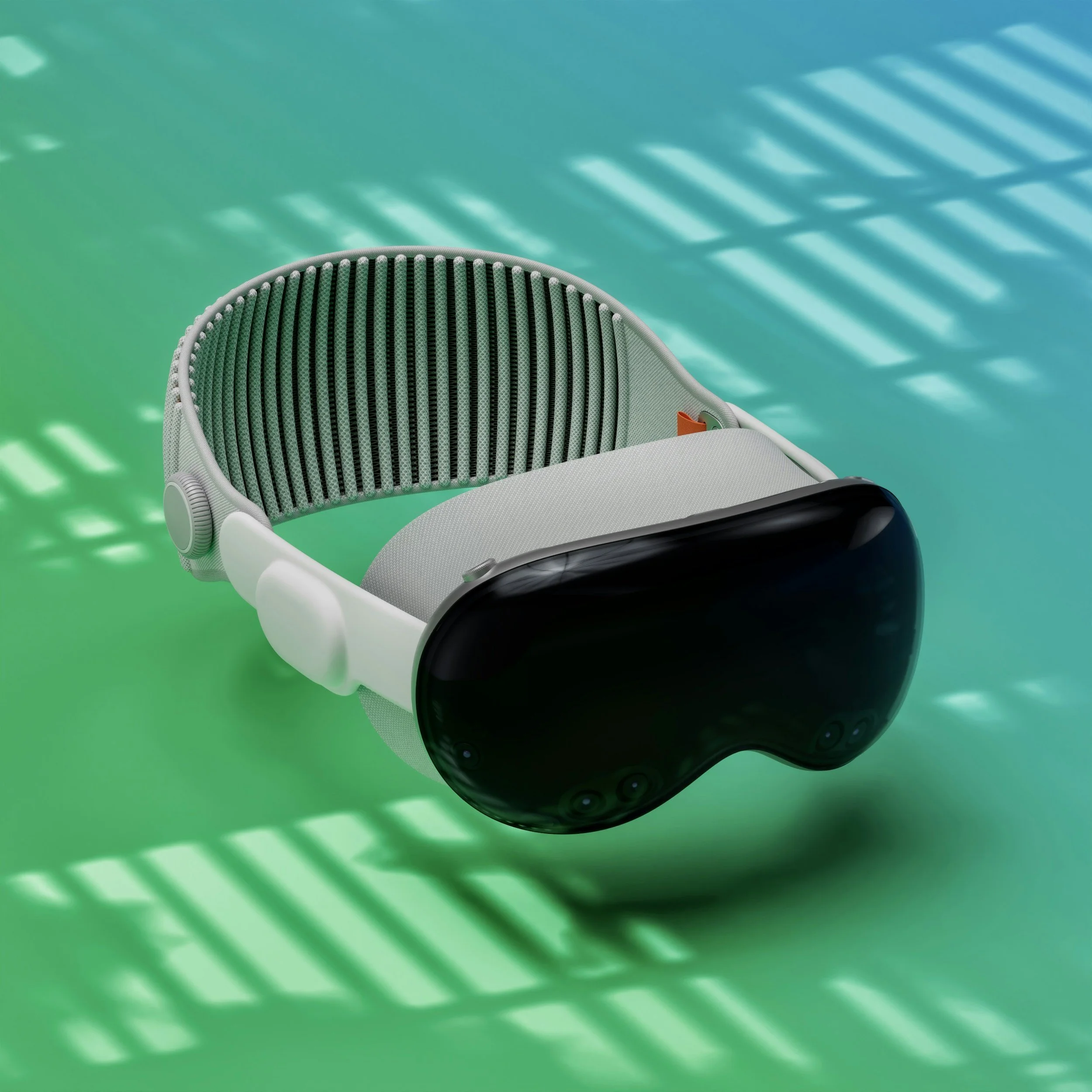
VR goggles, a thing of the past or the future?
Bifurcations are part of dynamical systems on our planet and are described in math through the swallow tail, pitchfork and other shapes that occur when something in the system suddenly changes. The time before the perturbation (or agitation) is a neutral state, but whatever causes a spike in our behavior makes us feel like a disaster has occurred. The pitchfork and swallow tail find their way into our hearts by being either a rudder that gets us to and fro, or being part of an angry mob and perhaps a few bifurcated tails as well, like a menacing demon.
These are all interesting ways we relate, but we are actually vibrating at a certain pitch, keeping us from realizing our best.
Sometimes we slam down the mouse and have to walk away because our bodies are in such an agitated state we vibrate and can’t sit still. It’s called seeing red or being in a storm of behavior. “I just can’t see my way through this situation,” so we throw a bit of a tantrum to get the ya-yas out, or burn off some anger, which is a normal human behavior because our minds don’t compute, our bodies feel out of alignment, telling our hearts we’re not good enough, smart enough, etc. We can make dynamical shifts in our minds through discovery and play, making us feel happy or elegantly elongated, if that’s a thing, which I think it is now.
Running Off or Running On
I have a nephew who is autistic. He was born during the pandemic lock-down on St. Patrick’s Day and is a lucky charm all his own. My brother calls him ‘The Dude’ because he’s just chill, doesn’t care one way or the other, but likes what he likes and one of his favorite things is water. One day, he disappeared. Now, taking off on their own is a common occurrence for little kids. They don’t know to be scared or worried about leaving, so they just go because there’s something they want to do. My sister disappeared when she was younger and I remember my mom frantically calling her name all over the neighborhood while my sister was safe in a neighbor’s house, chatting away. My daughter and her cousin disappeared when they were 3 because they wanted to show off their pretty dresses to their grandparents who lived one block over. Lots of parents have these stories and it’s the neighborhood network that keeps our kids safe because we really do all look out for each other. When an autistic child decides to leave, it’s called an elopement, a medical term, because of the safety risk. Their nervous systems and communication styles are different so they may have a harder time finding their way back. When my nephew disappeared, he went to his favorite place, the neighborhood pond. Again, neighbors were aware and called my brother who was able to retrieve his son without incident.
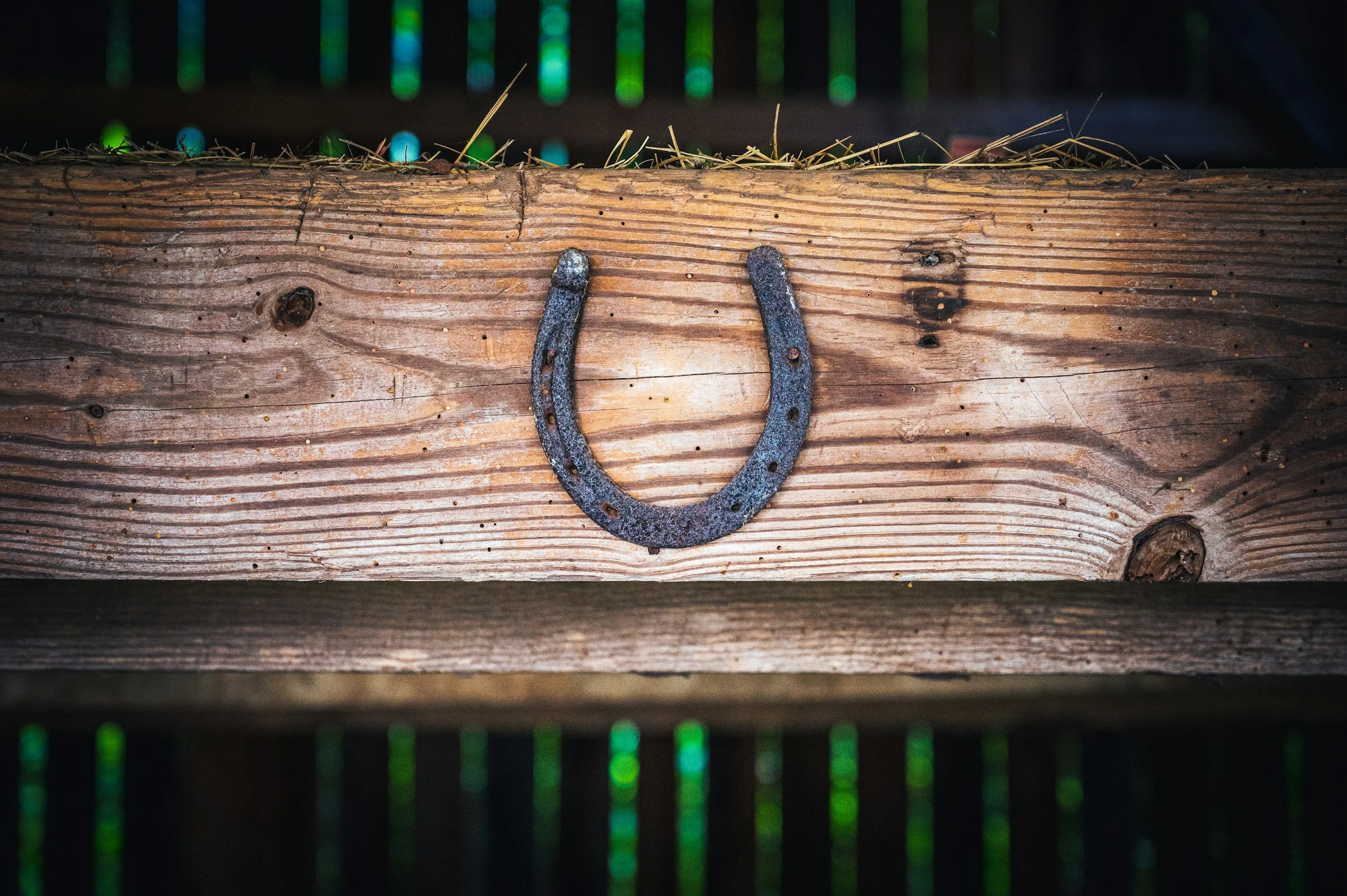
Luck comes in all shapes, sizes and guises
Because of this event, my brother and sister-in-law installed a sensor that rings like a doorbell every time it’s crossed so they know if anyone is eloping across the threshold. This device is a bot because it serves as a motion detector that brings up an awareness to change or do something. Our bots may not walk and talk (much) yet, but we do live with bots. All our heating and cooling needs are handled by the bot that is a thermostat which has moved onto the internet so you can manage it from a distance, though I’m still unclear why you would want to. Installing internet access into anything is essentially creating a bot. Mirrors now contain the internet so you can look at yourself and find out the weather at the same time. Internet searches create a bot for you to interact with every time you open up your browser. The camera attached to your doorbell is a bot. This one does walk and talk as you make your way through your vacation or work day. It provides information through your phone with an image and the preeminent door bell ring that used to be the old school bot that gave people an answer to the question, “Who is it?” Now, instead of being handled by the butler or maid, it has moved to the high school version of this type of counter intelligence, bringing you a social media stream of consciousness. Just like teenagers who want to know who called and who came over, you now know ALL THE TIME who rang your doorbell. And you don’t have to elope to know it.
So why are we grousing so much about robots taking over the world? Haven’t they already? They’re just not bipedal or have personalities as some might say, but the temperamental ones may have a different story.